
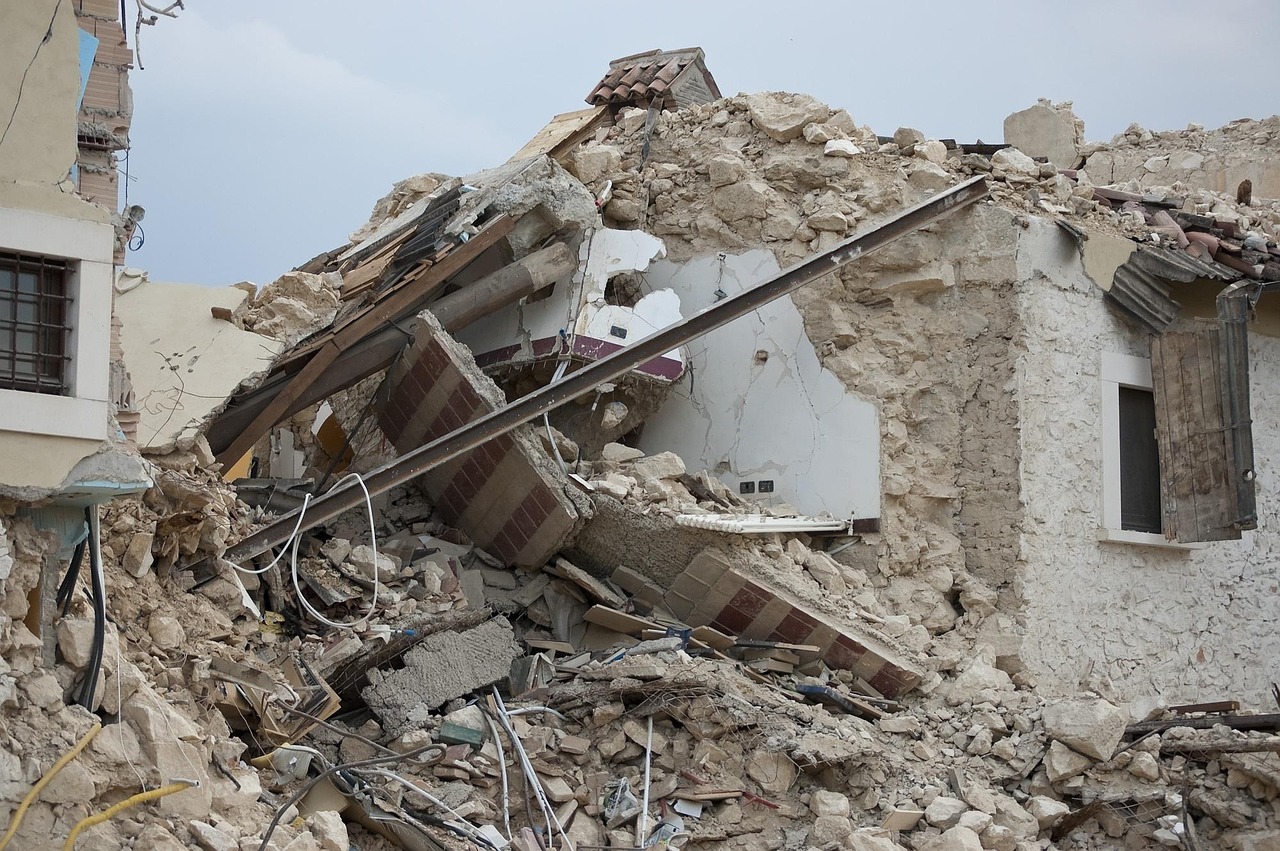
It was just past midnight on Sunday, 1st September, when the ceiling fan above me began to sway as if caught in an invisible storm. At first, I thought it was only my imagination, but then the ground began to growl. The walls cracked, glass broke, and the house felt like it was breathing in fear. I ran outside barefoot, joining neighbors who were just as shaken. Later, we learned that the same earthquake which rattled our homes had claimed over 1,400 lives in Afghanistan’s Kunar Province, leaving entire communities buried in grief.
Some raised their hands to the sky, crying that this was Allah’s azaab, a punishment for our sins. Others, still trembling, said it was just an earthquake, caused by the plates under the earth colliding. In that one terrifying moment, the same event carried two very different meanings: one divine, one scientific.
This has always been the case. When floods destroy villages, when disease spreads, when the earth shakes, people ask two questions. The first is how did this happen? Science answers that. The second is why did it happen to us, here and now? For that, people turn to God, scripture, or philosophy.
Religion tells us that disasters are not without meaning. The Qur’an speaks of past nations like ‘Aad and Thamud who were destroyed because of arrogance and corruption. The story of Noah’s flood in both the Qur’an and Bible shows disaster as more than nature—it was also a judgment. The Qur’an even says: “And whatever strikes you of disaster – it is for what your hands have earned. But He pardons much” (42:30). For believers, an earthquake is not just shaking ground—it is a mirror, showing us something about ourselves.
Science, however, gives another picture. Earthquakes come from plates of the earth moving and crashing. Floods come from heavy rain, poor planning, or melting ice. Pandemics spread when viruses pass into humans, often because of our own mistakes with nature. The 2005 Kashmir earthquake was traced to the Balakot-Bagh fault line, and the 2010 Haiti earthquake to the Enriquillo fault. These are real, physical processes. Science explains the how with great detail—but it does not explain why now, why these people. That is not its task.
Seen this way, disasters are not always punishments—but they are always lessons. A flood might be caused by poor drainage, but it also asks us if our corruption or negligence made it worse. An earthquake may be pure geology, but it still reminds us that human power is small compared to nature. Science helps us prepare—through strong buildings, forecasts, and medicine. Faith helps us respond—with patience, humility, and compassion.
History shows us that this debate is not new. In 1755, the city of Lisbon was struck by a massive earthquake followed by a tsunami, killing tens of thousands. Churches collapsed on worshippers, while red-light districts remained strangely less damaged. Religious leaders quickly declared it God’s punishment for sin, while philosophers like Voltaire and Rousseau challenged this idea, asking whether a just God would slaughter the innocent alongside the guilty. The debate shook Europe almost as violently as the earthquake itself, fueling the Enlightenment’s questioning of divine calamity.
Yet even in our modern world of satellites and sensors, the same debate lingers. When the tsunami struck Indonesia in 2004, some called it divine punishment, while others blamed faulty early warning systems and poor urban planning. During the COVID-19 pandemic, a few voices declared it an azaab, while scientists traced its origins to zoonotic transfer and global travel networks. The pattern repeats itself: one side sees moral judgment, the other sees natural process.
This is where the struggle lies. If we say every calamity is a punishment from God, we end up blaming even innocent children who die in it. But if we say it is only a natural event, we turn terrible human pain into nothing more than numbers and charts. Both extremes leave the heart unsatisfied.
A balanced view may be wiser. Calamities follow the laws of nature, and those laws were created by God. Earthquakes and floods are natural, but they are also reminders of how weak and dependent we really are. The Prophet Muhammad ﷺ gave us a powerful example when people thought a solar eclipse was linked to his son’s death. He corrected them: “The sun and the moon are two of the signs of Allah; they are not eclipsed for the death or birth of anyone. So when you see them, remember Allah” (Sahih al-Bukhari, 1048). The event was natural, but still a sign to reflect.
Take floods, for instance. Yes, they come from rainfall, melting snow, or broken dams. But when corruption leads to poor urban planning, illegal construction blocks natural waterways, or negligence leaves drainage systems broken, then human responsibility worsens the disaster. In this sense, a calamity is both natural and moral. An earthquake may be caused by tectonic plates, but it can remind us of our fragility, the limits of human power, and the urgency of compassion.
This is where science and religion can meet instead of clash. Science equips us with tools to prepare—stronger buildings, early warning systems, medical research, and environmental care. Religion equips us with the ability to reflect—turning tragedy into a lesson, grief into patience, and vulnerability into humility. Together, they form a fuller picture of human survival and meaning.
When the ground shakes or the waters rise, perhaps the wiser response is not to say it is only azaab, nor to claim it is only nature. It is both—a natural event governed by physical laws and a spiritual reminder woven into the human journey. Science helps us survive the how. Faith helps us endure and make sense of the why. In the fragile space between the two, we may discover not punishment alone, but a call toward wisdom, humility, and shared humanity.
Maybe that is the true lesson of calamities: not to leave us cursing the heavens or worshipping science, but to make us see our place more clearly. We are small, yet significant; fragile, yet capable; powerless against nature’s might, yet powerful in how we choose to respond. And perhaps in that trembling space—between fear and hope, despair and meaning—we find that calamity, whether divine or natural, is ultimately a mirror, showing us who we are and who we might become.
So when the ground shakes or the waters rise again, perhaps the right response is not to say it is only azaab or only nature. It can be both: a natural event and a spiritual reminder. Science helps us understand the how. Faith helps us carry the why. And in between the two, we may find not just fear, but wisdom, mercy, and a call to become better.
Writer | Engineer | Political commentator |