
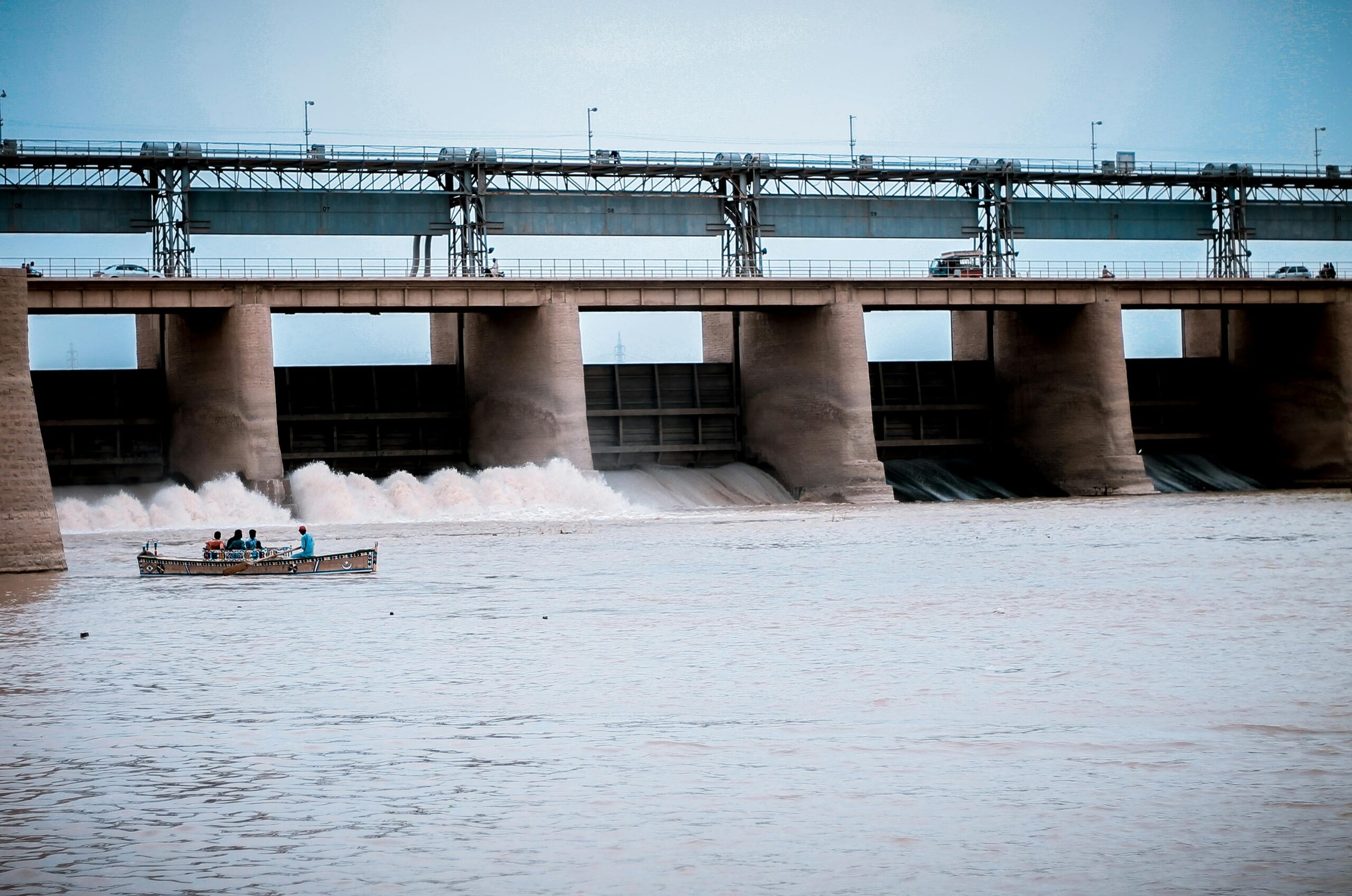
The stroy of Indus Water Treaty not started in 1960 but it started back in 1947, when the two newly established realm emerged on the world map_ India and Pakistan. In the very beginning, Pakistan encountered with social, political, economic, geographical and hydrological challenges. One of the main hydrological challenge was the water apportionment between the two states. Each state claimed that water was her legal right that consequently, culminated in Indus Water disputes.
Blockage of water from upper riparian side on 1st April 1948 dismayed Pakistan for the use of such a natural resource, that was of paramount significance for Pakistan. The Inter Dominion Accord, a temporal arrangement_ signed on 4th May 1948_ was the first breakthrough in this regard. According to the agreement, Pakistan would make an annual payment to India; in return, India would release sufficient water for irrigation in Pakistan. Both the parties agreed that the negotiation process would be followed for a permanent solution.
Owing to the lack of inclusivity and willingness, both the parties were reluctant to compromise on their respective stances. With the passage of time, several efforts were put in and consequently, culminated in Indus water treaty that was signed on 19th September 1960 by India and Pakistan under the auspices of the World Bank. The treaty ensures apportionment of water between the two states. As a consequence, waters of the eastern rivers; Sutlej, Beas and Ravi, were assigned exclusively to India, while Pakistan received exclusive water rights of the western rivers; the Indus, Jhelum and Chenab.

The current dispute between India and Pakistan is over the Ratle dam on Chenab River in Kishtwar. After long delay, Indian government allocated Rs 5,282 crore for Ratle hydroelectric project in 2021, an 850 megawatt project. The recent development being made by Pakistan to keep the matter before The Court of Arbitration. India did not attend the proceedings of the Court of Arbitration at The Hague.
In contrast, India has been protesting against Pakistan’s Left Bank Outfall Drain (LBOD) project. In December 2016, World Bank stopped both-process of appointing court of arbitration and a neutral expert to arbitrate. Another issue lies due to the construction of a 330 MW Kishanganga Hydro Electric Project which is located on Kishanganga, a tributary of Jehlum river, where Pakistan’s govt claims that the water is being diverted on the Indian side.
Throughout the world, water issues or one could say that water wars have been surfacing since the changing climate has taken over the globe. One of the biggest problems Egypt has right now is over the waters of the Nile river.
All it taking place is due to dwindling water resources. Pakistan’s case is appalling owing to its depleting per capita availability that has crossed down the water scarcity threshold by reaching to 800 cubic meters. This rising water scarcity is also bringing a sense of fear for such a high populated state.
Pakistan has faced pretty bad climate-induced flood last year affecting 33 million people and lost $30 billion to the feeble economy which is on the verge of default. In addition, cyclones killed and displaced thousands, destroyed livelihoods, and damaged infrastructure.
The inimical climate change raises the prospect that these and other natural hazards will be taken place with greater frequency and intensity in the coming decades—a stark reminder that Pakistan is one of the country most vulnerable to the effects of climate change. That is why experts have also considered to revamp the Indus water treaty by giving climate change due consideration.

Writer | Engineer | Political commentator |